


Market spotlight for Tuesday, May 26, 2026: Romania is one of the most useful places to test cash-on-delivery ecommerce because it combines scale, practical buyer behavior, and enough logistics maturity for serious operators. Trackify’s daily signal points to utility products, wellness devices, compact kitchen tools, and giftable accessories as the strongest near-term angles. The opportunity is not just product selection. The real leverage is connecting product validation, local fulfillment, courier execution, and clean tracking in one system.
Romania is becoming the practical COD test market for 2026
Romania has the exact mix that makes a cash-on-delivery operation attractive: a large addressable ecommerce audience, strong Facebook and TikTok discovery, courier coverage outside the capital, and buyers who still respond well to simple utility offers. For merchants selling low-ticket physical products, this is not a market where the winning strategy is to look premium. The better play is speed, trust, and clarity. The buyer needs to understand what the product solves in five seconds, see the final price immediately, and feel that delivery will actually happen without friction.
What products fit Romania right now
Today’s campaign baseline shows portable blender bottles, posture correctors, electric lunch boxes, and compact home helpers performing well. Those products share three traits: they are easy to explain visually, they fit impulse buying, and they can be sold with a believable margin after courier and return costs. The best products for Romania in 2026 are not necessarily the newest gadgets. They are products with visible before-and-after value: a straighter back at work, hot food at the office, faster meal prep, cleaner storage, or a small daily convenience that feels worth paying for at the door.
Why fulfillment partners can win this market
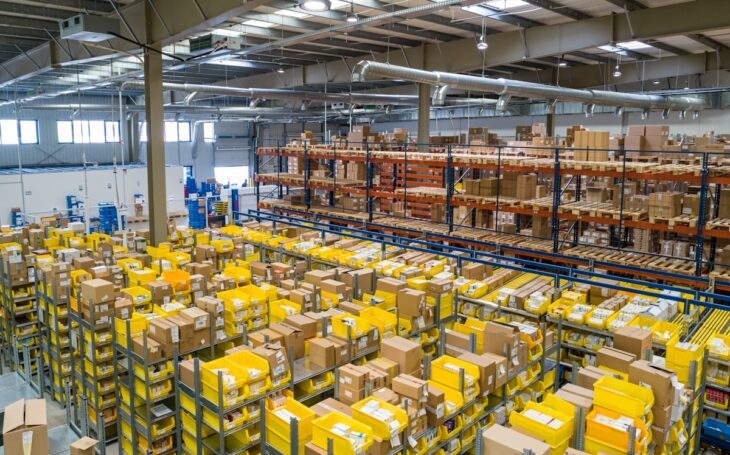
A local fulfillment partner has an advantage because COD success depends on execution after the ad click. Media buyers can create demand, but the local operator protects the margin: fast confirmation calls, accurate stock control, clear courier handoff, smart return handling, and clean reporting. When those basics are strong, advertisers can scale budgets with less fear. When they are weak, even a strong product dies because refunds, missed calls, and slow dispatch destroy the economics.
The operating model for the next 90 days
The strongest move is to build a narrow testing pipeline instead of chasing every viral product. Start with three product families: kitchen convenience, posture and wellness, and personalized gift items. For each product, prepare one simple landing page, one COD checkout flow, three UGC-style creatives, and a strict kill rule. If a product spends two times the target CPA without confirmed orders, pause it or replace the creative. If it produces purchases below target CPA for two consecutive days, increase budget in controlled steps and prepare backup stock before the ad account outruns operations.
How to read the Romanian COD opportunity
The Romanian buyer is not a single profile. Bucharest and other large cities behave differently from smaller regional cities, and that matters when a campaign moves from testing into scale. Urban buyers often compare products faster and expect a stronger digital experience. Regional buyers may be more responsive to the direct COD promise, especially when the product solves a visible daily problem. A good operator should segment reporting by city, courier zone, confirmation rate, and failed delivery reason instead of judging the whole country from one blended CPA.
The product page also needs to match the market. Long brand storytelling is less useful than proof, demonstration, and delivery clarity. Show the product in use, show what comes in the box, show the final price, and repeat the delivery promise near the order form. If the offer includes a bundle, the savings must be obvious. If the product has sizes, colors, or variants, reduce choice until the conversion rate is stable. Complexity at checkout is expensive in COD because every uncertain order increases the chance of failed confirmation or return.
Fulfillment metrics that decide profit
For COD ecommerce, the sale is not finished when the form is submitted. The economics are decided by the chain after the lead: how quickly the buyer is called, how many calls are answered, how many orders are confirmed, how fast the parcel leaves the warehouse, how often the courier delivers on the first attempt, and how many parcels return. A campaign with a low Facebook CPA can still lose money if the confirmation team is slow or if the courier experience is weak. A campaign with a higher CPA can still be profitable if operational execution is excellent.
This is where Trackify creates leverage. The system should make every step visible enough for fast decisions: product-level delivery rate, partner-level dispatch time, courier-level return rate, and campaign-level confirmed CPA. When that information is available daily, merchants can scale with discipline. They can increase budget on products that have both advertising signal and operational quality, while cutting products that create hidden losses after the ad click.
Recommended product testing matrix
The first testing matrix for Romania should include one kitchen product, one wellness product, one gift product, and one household convenience product. Each product should get its own landing page, three creative angles, and a fixed target CPA. For example, a portable blender can be tested with fitness, office lunch, and summer travel angles. A posture corrector can be tested with office pain, student posture, and daily confidence angles. A mini sealing machine can be tested with food waste, kitchen organization, and family savings angles.
Do not test too many variables at once. The goal is to discover whether the product-market fit is real, not to create a reporting mess. Keep the price stable for the first test, use the same courier rules, and review performance after enough spend has passed through the funnel. If a product wins, the next step is not only more budget. The next step is backup stock, better packaging, localized call scripts, and a second creative batch before fatigue starts.
Expansion beyond Romania
Romania is also useful because the lessons travel. Bulgaria, Poland, Croatia, Albania, Kosovo, and Bosnia each have different languages and buyer expectations, but many of the same product families can work if the operational layer is localized. Kitchen utility products, practical wellness products, pet-care tools, and giftable accessories remain attractive because they are visual, low-ticket, and easy to explain through short-form video.
The expansion sequence should be conservative: prove the product in one market, document the offer, prepare translated pages, validate courier economics, and then test the neighboring market with a smaller budget. A product that works in Romania should not be blindly copied everywhere. It should be adapted with local pricing, delivery promise, payment expectations, and support scripts. That is the difference between casual dropshipping and a repeatable regional ecommerce system.
Key data points to watch
For Romania, the most important numbers are not vanity metrics. Watch confirmed order rate, call pickup rate, dispatch time, delivery success rate, return reason, courier cost per delivered order, and CPA after rejected orders. If those numbers are visible every day, scaling becomes a controlled decision instead of a guess. A product with a slightly higher ad CPA can still win if confirmation and delivery quality are stronger than the market average.
Teams entering Romania should connect the campaign data to operational data from day one. That means every product test needs a landing page, a stock rule, a courier rule, and a partner dashboard. The fastest way to lose margin is to discover operational problems only after the campaign is already spending. The fastest way to scale is to give the fulfillment partner the same urgency as the media buyer.
For companies planning regional expansion, Romania can also serve as a template for Bulgaria, Poland, and the Balkans. The exact product mix changes by country, but the operating discipline stays the same: choose products with visible utility, keep the checkout direct, confirm quickly, ship reliably, and measure every step.
Explore Trackify’s local partner model at Become a Local Partner, or open a merchant account through Trackify signup.