Cash-on-delivery (COD) dropshipping in Europe is a fundamentally different business than what most online guides describe. While western European markets have largely shifted to card payments and digital wallets, the Balkans, Eastern Europe, and several emerging EU markets still run on cash — and that creates a massive opportunity for dropshippers who understand how the supplier chain actually works.
This guide breaks down the full logistics chain behind COD dropshipping in Europe: who the suppliers are, how cash is collected and remitted, what fulfillment partners do, and how platforms like Trackify have automated the entire pipeline so you can run a multi-country COD operation without a local bank account in each market.
What Makes European COD Dropshipping Different
In standard dropshipping, the flow is simple: customer pays online → supplier ships → done. COD flips this. The customer pays only when the package arrives. That single change creates an entirely different logistics requirement: you need a physical person (a courier) to collect cash at the door, record it, and send it back to the seller.
This is why COD dropshipping in Serbia, Macedonia, Croatia, Bosnia, Romania, and Bulgaria requires a local fulfillment network — not just a product catalog. The countries where COD dominates include Serbia (where COD accounts for roughly 70–80% of e-commerce transactions), Macedonia, Bosnia, Montenegro, and Romania. Even Poland — a major EU market — sees significant COD volume, particularly in the 35+ demographic.
The Full COD Supplier Logistics Chain
Understanding the chain is essential for running a profitable COD operation. Here's how it works end-to-end:
1. The Product Supplier
This is where the physical product comes from — typically a manufacturer or wholesaler in China (via AliExpress, CJ Dropshipping, or direct factory) or a European warehouse for faster delivery. The supplier ships to either a local fulfillment warehouse or directly to the end customer. For COD markets in the Balkans, local warehousing is strongly preferred because delivery times of 7–14 days (from Asia) lead to high return rates — customers forget they ordered, or simply refuse delivery.
2. The Local Fulfillment Warehouse
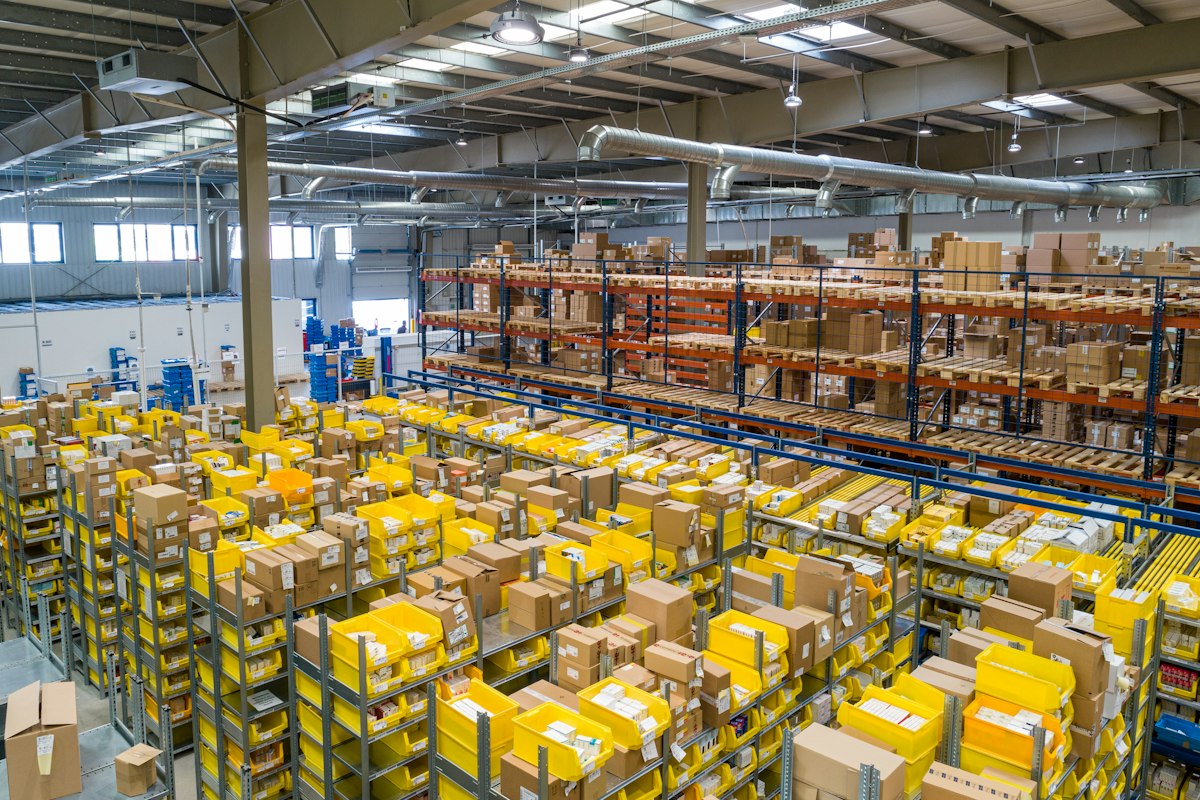
This is the critical layer most newcomers miss. A local warehouse in Serbia, Macedonia, or Romania receives bulk inventory from the supplier. When an order comes in, the warehouse team picks, packs, and labels the parcel. Having stock locally means 1–3 day delivery, which dramatically cuts return rates and increases COD completion rates (the percentage of COD orders where the customer actually pays on delivery).
3. The Courier Network
The courier is the backbone of any COD operation. They physically deliver the package, collect cash from the customer, and return that cash to the fulfillment partner. In Serbia, the major COD couriers are Post Express, D Express, BEX Express, and City Express. In Macedonia, Brza Poshta and Eurosped. In Romania, FanCourier, Sameday, and Urgent Cargus. Each has its own COD collection cycle — typically funds are remitted to sellers every 7–14 days.
4. The Logistics Platform
Managing couriers across multiple countries — each with different APIs, payout schedules, and tracking systems — is where most dropshippers hit a wall. This is where a platform like Trackify comes in. Trackify integrates with all major Balkan and Eastern European couriers, automates label creation, tracks shipments in real time, and consolidates COD payouts into a single dashboard. Instead of managing five courier relationships across three countries, you manage one platform.
Choosing the Right COD Supplier for European Markets
Not all product suppliers are suitable for COD markets. Here's what to look for when selecting suppliers for a COD dropshipping operation in the Balkans or Eastern Europe:
Local or Regional Warehouse Availability
Prioritize suppliers with warehouses in Serbia, Romania, Bulgaria, or EU fulfillment hubs in Germany or Poland. Delivery from a regional warehouse takes 2–5 days; from China, 10–20 days. In COD markets, longer delivery times = higher return rates. A 20% return rate on €30 products with a 7-day delivery window is common; the same product with 2-day delivery can hit return rates below 10%.
Product Categories That Work in COD Markets
COD markets in the Balkans have distinct purchasing behavior. Products priced between €15–€45 convert best. Categories with strong COD performance include: health & wellness gadgets, kitchen tools, phone accessories, beauty/skincare, pet accessories, and home organization products. Avoid high-ticket items (customers are more likely to refuse COD packages over €80) and perishables.
Return and Refund Policy Compatibility
COD orders have higher return rates than prepaid orders. Make sure your supplier accepts returns from multiple Balkan countries and has a clear process for reverse logistics. Some suppliers offer a "returnless refund" model for low-value items, which can simplify operations significantly.
The Economics of COD Dropshipping in Europe
Let's break down the real numbers for a COD dropshipping operation on Trackify across Serbia and Macedonia:
Example: €25 product, COD market, 100 orders/month
- Revenue: €2,500 (100 orders × €25)
- Product cost: €8 × 85 completed = €680 (85% completion rate)
- Fulfillment + shipping: ~€4/order × 100 = €400
- Trackify platform fee: €0.50/shipment × 100 = €50
- Marketing/ads: ~€300
- Net profit: ~€1,070/month
This is a conservative estimate. Experienced operators running 500–1,000 COD orders/month with optimized ad creatives and tested products can achieve €5,000–€15,000/month net from Balkan markets alone. The key variables are completion rate (aim for 80%+), product margin (aim for 3–5x cost), and return rate (keep below 12%).
How Local Logistics Partners Fit Into the Chain
For dropshippers who don't want to manage warehouses themselves, local logistics partners are the answer. These are companies or individuals who have warehouse space, courier relationships, and cash management infrastructure in a specific country — and they make it available to dropshippers via a platform like Trackify.
The model works like this: the local partner receives bulk stock, picks and packs orders, ships via local couriers, collects COD payments, and remits funds to the dropshipper (minus their fee). Trackify coordinates this relationship, providing the software layer for order management, tracking, and financial reconciliation.
This is why Trackify actively recruits local partners in markets where it's expanding — Croatia (EU-compliant COD market), Slovenia, Hungary, Romania, and Turkey. Each local partner extends the platform's geographic reach without requiring Trackify to build physical infrastructure in every country.
Automating COD Operations: What Trackify Does
Running COD dropshipping manually — across multiple couriers, multiple currencies, and multiple fulfillment partners — is operationally intense. Trackify's platform automates the key friction points:
- ✓Automatic label generation — Orders flow in, courier labels print automatically, no manual data entry
- ✓Multi-courier integration — Trackify connects to all major Balkan courier APIs in one dashboard
- ✓Real-time shipment tracking — End-to-end visibility from warehouse to customer door
- ✓COD reconciliation — Automatic matching of collected cash to orders, with payout reports
- ✓Return management — Track returned parcels, manage re-shipping or refund workflows
- ✓Multi-country dashboard — Serbia, Macedonia, Croatia, Montenegro all in one place
At €0.50/shipment SaaS pricing, Trackify is designed to be accessible at any scale — a seller doing 50 orders/month pays €25/month, while a high-volume operator doing 3,000/month pays €1,500 but is running a business generating €50,000+ in revenue.
Scaling From One Country to Multiple Markets
Once a COD dropshipping operation is profitable in one Balkan market, the natural move is to expand. Each market has its own courier infrastructure, currency, and consumer behavior — but the product and marketing learnings transfer well. A skincare product that sells well in Serbia often performs similarly in Macedonia and Bosnia.
Trackify's multi-country architecture is built for this. You can add a new country to your dashboard, connect the relevant courier integrations, and start shipping — without changing your order management workflow. The platform handles currency differences (RSD, MKD, BAM) and payout consolidation.
The typical scaling path for Trackify operators: Start with Serbia (largest Balkan COD market) → add Macedonia (smaller but high completion rates) → expand to Croatia (EU market, card payments available alongside COD) → test Romania (high volume, competitive but huge market) → Montenegro (small but untapped).
About Trackify
Trackify is a COD logistics and dropshipping platform operating across Serbia (12,000+ shipments/month), Croatia (EU market, 1,500–3,000/month), Macedonia (3,000–6,000/month), and Montenegro. Pricing: €0.50/shipment SaaS or €0.20/shipment partnership model. Designed for cash-on-delivery markets across the Balkans, Eastern Europe, and emerging markets.

Get Started With COD Dropshipping or Become a Local Partner
Whether you're a dropshipper looking to enter European COD markets, or a logistics professional with local infrastructure looking to monetize it — Trackify has a place for you.
For Dropshippers
Access 12,000+ monthly shipments infrastructure, automated COD reconciliation, and multi-courier integration — all for €0.50/shipment.
Start DropshippingFor Local Partners
Have warehouse space and local courier relationships? Earn €0.30/shipment by powering Trackify's logistics network in your country.
Become a Local Partner