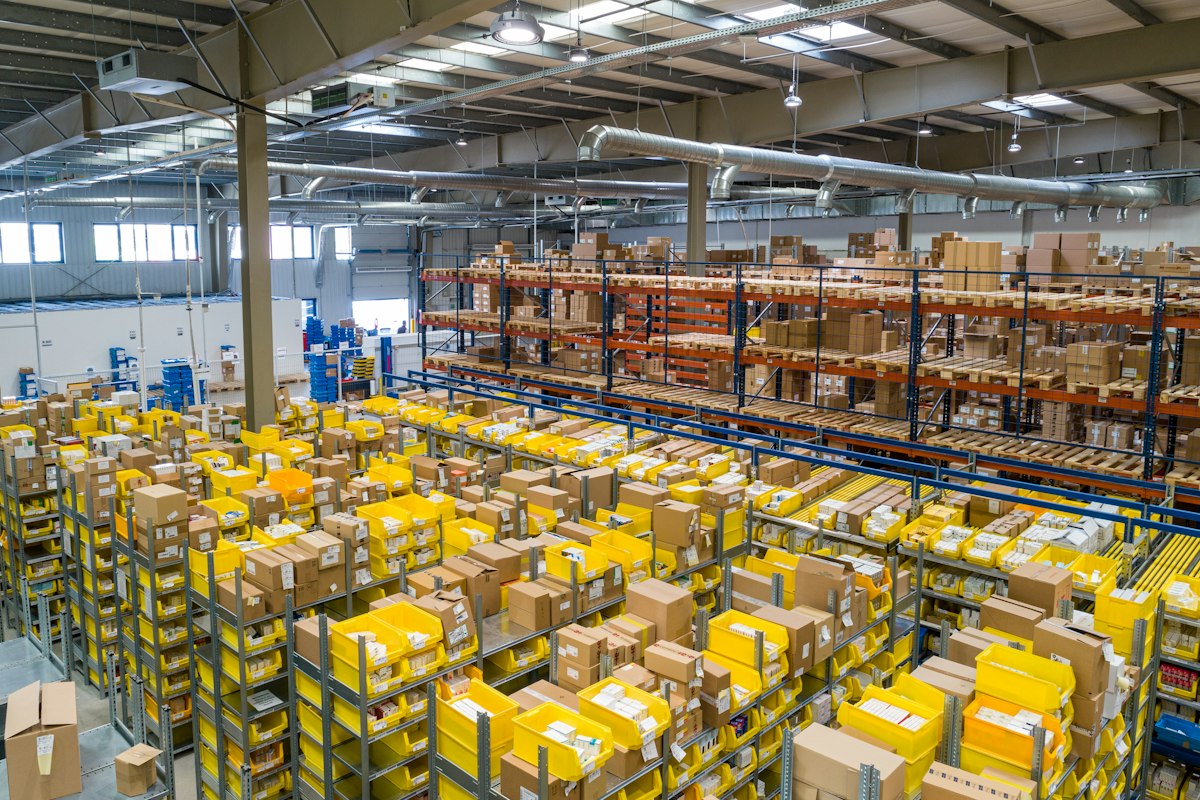
The most important supplier and logistics question for dropshipping in 2026 is no longer “where can I buy the cheapest product?” It is “where should inventory sit before the first customer clicks buy?” For cash-on-delivery operators in the Balkans, Eastern Europe and emerging EU corridors, that question decides delivery speed, confirmation quality, return exposure and cash flow. Direct-from-China shipping can still work for testing, but serious COD scaling increasingly needs a cleaner route: source from reliable suppliers, pre-position winners in a regional or EU warehouse, connect orders to local couriers, and manage every confirmation, delivery attempt, failed delivery and cash reconciliation in one operating system.
This Saturday supplier and logistics explainer is built around current market signals. Recent ecommerce coverage points to the same direction: shoppers expect faster cross-border delivery, logistics quality is now a conversion factor, Eastern Europe cannot be treated as one uniform market, and EU import-cost pressure makes local warehousing more attractive for repeatable winners. The Balkan eCommerce Summit 2026 also underlined how quickly the region is moving from “periphery” to a serious ecommerce frontier. For Trackify, that creates a direct opportunity. COD sellers need more than suppliers. They need a supplier-to-door execution stack.
Why supplier choice alone is not enough
Many dropshippers still evaluate suppliers only by catalog size, product cost and estimated shipping time. That is too shallow for COD. In a COD funnel, the seller pays for traffic before the order is confirmed, waits for a customer to answer, depends on courier performance, and receives cash only after successful delivery and reconciliation. A cheap supplier can become expensive if product quality is inconsistent, packaging is weak, dimensions are wrong, tracking is delayed, or restocking decisions are made too late. The best supplier is not the lowest-cost seller on a marketplace. The best supplier is the one that can feed a predictable logistics process.
A practical 2026 supplier checklist should include unit margin after local shipping, defect rate, packaging stability, replenishment speed, product weight, video-demo potential, customs exposure, and return resale value. Compact products with obvious value still win because they are easier to store, easier to explain, and easier to deliver profitably. Portable blenders, posture correctors, sealing machines, electric lunch boxes, personalized gifts and pet-care tools all fit the model better than bulky low-margin products. The pattern is simple: a COD product must be bought by the customer and delivered by the system.
The warehouse decision: test remotely, scale locally

The strongest operating model is usually staged. First, test demand with limited supplier stock and conservative ad spend. Second, confirm that the product produces real orders, not just clicks. Third, move proven units closer to the customer before scaling. This is where a Balkan or EU warehouse becomes powerful. Delivery windows shrink, confirmation calls become more credible, customers are less likely to forget the order, and couriers can attempt delivery while purchase intent is still warm. In COD markets, time kills intent. Every extra day between checkout and courier contact increases cancellation and failed-delivery risk.
EU warehousing is especially relevant as import rules and shopper expectations tighten. Consumers in Europe are conditioned by marketplaces to expect fast delivery and transparent tracking. A three-week shipping promise is not just slow; it reduces trust. Local inventory does not need to mean reckless bulk buying. It means using data to decide which products deserve stock, which countries deserve allocation, and when to stop replenishing. Trackify’s own operating data shows why this matters: Serbia already handles 12,000+ shipments per month, Macedonia 3,000–6,000, Croatia 1,500–3,000 as an EU market, and Montenegro runs as a partnership model. Those volumes create learning that pure supplier lists cannot provide.
COD fulfillment is a chain, not a checkout option
Cash on delivery needs choreography. A buyer sees the ad, lands on a localized page, understands the offer, submits details, receives confirmation, gets courier updates, accepts the package, pays cash or card to the courier, and then the seller waits for reconciliation. Each step can leak margin. Bad landing-page copy creates fake orders. Slow confirmation creates unreachable customers. Poor courier routing creates failed attempts. Weak return handling turns unsold inventory into dead stock. Delayed reconciliation hides cash flow problems until they become operational problems.
That is why a COD platform matters. Trackify connects the parts of the chain that generic ecommerce tools usually separate. It is built for cash-on-delivery logistics, dropshipping and local partner expansion across Balkan and EU markets. The SaaS model is roughly €0.50 per shipment, with partnership models around €0.20 per shipment where a local operator handles the ground execution. For a seller, the advantage is clarity: orders, confirmations, delivery status, courier movement, products, clients and reconciliation can be managed around the realities of COD rather than forced into a card-first workflow.
Local partners are the missing layer in many emerging markets
Supplier networks and warehouses solve only part of the problem. In many COD countries, the missing layer is a capable local partner. A local partner understands courier relationships, customer behavior, local language, returns, holidays, address patterns and payment expectations. This is why Trackify’s Montenegro model is strategically important. The software can power the workflow, while the local partner runs the market. That model can extend beyond the Balkans into Eastern Europe, Africa, Asia and South America, especially in places where COD remains common and ecommerce infrastructure is fragmented.
For potential partners, the opportunity is not to build software from zero. It is to attach local operational knowledge to a proven COD system. A partner can start with a market where sellers already struggle with delivery management, cash collection and client reporting. Trackify provides the operating backbone. The partner provides fulfillment relationships, market access and local execution. Together, they turn COD from a messy manual business into a measurable logistics product.
What dropshippers should do this month
The next practical move for dropshippers is to split product work into three lanes. Lane one is discovery: find compact products with strong visual demos and enough margin to survive failed deliveries. Lane two is validation: run localized ads, check order quality, confirm phone answer rates, and measure delivery completion rather than only cost per lead. Lane three is warehousing: once a product proves itself, move stock closer to the target country and connect it to a COD-first workflow. This prevents the classic mistake of scaling ads before the logistics base is ready.
A simple scorecard helps. Rate each product from one to five for margin, demo clarity, package risk, return resale value, replenishment speed, country fit and confirmation quality. Products with strong ad performance but weak logistics should be capped. Products with moderate ad performance and excellent delivery economics may deserve more testing. The goal is not to chase viral products blindly. The goal is to build a supplier and warehouse engine that can repeat wins across countries.
What local partners should do this month
Local partners should map their country’s COD friction. Which couriers handle COD reliably? How long does reconciliation take? Which cities have the highest failed-delivery rates? Which ecommerce sellers need fulfillment but lack software? Which product categories are already moving through informal channels? This research is more valuable than a generic business plan. Trackify is strongest when paired with practical local intelligence. A partner who can bring courier relationships and operational discipline can launch faster than a software team starting from scratch.
The best first market is not always the biggest. It is the market where the pain is obvious, the partner can influence execution, and sellers are already paying hidden costs through missed calls, manual spreadsheets, poor tracking, slow cash collection or unmanaged returns. Once the first workflow works, expansion becomes a process: add sellers, add products, add warehouse capacity, improve courier SLAs and report performance cleanly.
The Trackify angle: supplier-to-door control
Trackify’s advantage is that it sits between ecommerce demand and physical delivery reality. It can support a dropshipper who wants to start selling now, and it can support a local partner who wants to operate a COD logistics business in a new country. That dual position is valuable in 2026 because the winning model is no longer just “find product, run ads.” The winning model is supplier selection, local stock, confirmation discipline, courier execution, return handling and cash reconciliation in one loop.
For dropshippers, Trackify reduces the operational chaos that appears after the first profitable campaign. For partners, it makes the business easier to package and sell: COD logistics software, delivery management, client reporting, and a pricing model tied to shipment volume. Serbia, Croatia, Macedonia and Montenegro prove the model across different market sizes and operating setups. The next step is repeating the pattern in markets where COD remains important and local execution is still underbuilt.
Bottom line
The supplier-to-warehouse decision is becoming a growth decision. In 2026, ecommerce sellers who keep winners far away from customers will lose speed, trust and margin. Sellers who test carefully, warehouse proven products closer to demand, and run COD through a dedicated operating system will have a real advantage. The opportunity is especially strong in the Balkans, Eastern Europe and emerging markets where COD is not a relic but a practical trust mechanism. Trackify is built for exactly that gap: turning supplier products into delivered, reconciled, repeatable COD revenue.
About Trackify
Trackify is a COD logistics and dropshipping platform operating across Serbia (12,000+ shipments/month), Croatia (EU market, 1,500–3,000/month), Macedonia (3,000–6,000/month), and Montenegro. Pricing: €0.50/shipment SaaS or €0.20/shipment partnership model. Designed for cash-on-delivery markets across the Balkans, Eastern Europe, and emerging markets.