2026 market signals
- • Market signal: Poland e-commerce was estimated around $25B in 2024 and is forecast by PwC/Strategy& to reach about $52B by 2028. Trade.gov reports nearly 80% of Polish internet users buy online, while Mordor estimates the 2026 e-commerce market at $26.71B with a path toward $38.47B by 2031.
- • Logistics signal: Mordor estimates Poland courier, express and parcel at $4.63B in 2026, with B2C driving more than half of revenue and e-commerce contributing over 40% of demand. Parcel lockers, domestic delivery density and cross-border trade are central to the market.
- • COD angle: Poland is more digital than many Balkan markets, but COD logic still matters for sellers entering from outside the market: confirmation, address quality, failed-delivery prevention, fast returns and clear settlement discipline.
Why Poland is worth a dedicated COD playbook
Poland rewards operators who respect its maturity. The country is not a blank map where a generic Balkan landing page, slow shipping and manual spreadsheets are enough. Customers compare offers quickly, expect delivery choices and punish unclear communication. At the same time, the market is still practical and price-led, which creates room for direct-response offers, bundle economics and performance marketing if the backend is controlled.
The most useful way to think about Poland is as a bridge market. It has EU regulation, strong logistics and high digital adoption, but also Central and Eastern European buying behaviour where trust, delivery certainty and value matter. That makes it relevant for Trackify because the platform was built around the hard operational parts of COD and dropshipping: orders, confirmations, shipments, courier status, returns, COD settlement and partner visibility.
What buyers expect in Poland
For product selection, do not start with “viral” alone. Poland needs margin, low damage risk, understandable benefits and a delivery promise that can be kept. Beauty accessories, home improvement, household gadgets, pet products, health-adjacent accessories and simple electronics can work, but only when return reasons are tracked from day one. The best launch list is not the biggest catalogue; it is a controlled set of SKUs with enough margin to pay for ads, failed delivery and support.
Payment behaviour is moving strongly digital, especially cards, wallets and BNPL. Still, COD thinking remains useful because it forces discipline. If a seller can operate safely under COD economics, the same system usually performs better for prepaid orders too. Confirmation scripts reduce fake orders, address checks reduce courier waste, return tracking protects cash flow, and daily dashboards reveal whether a campaign is scaling profitably or just generating noisy shipments.
The operating model that works
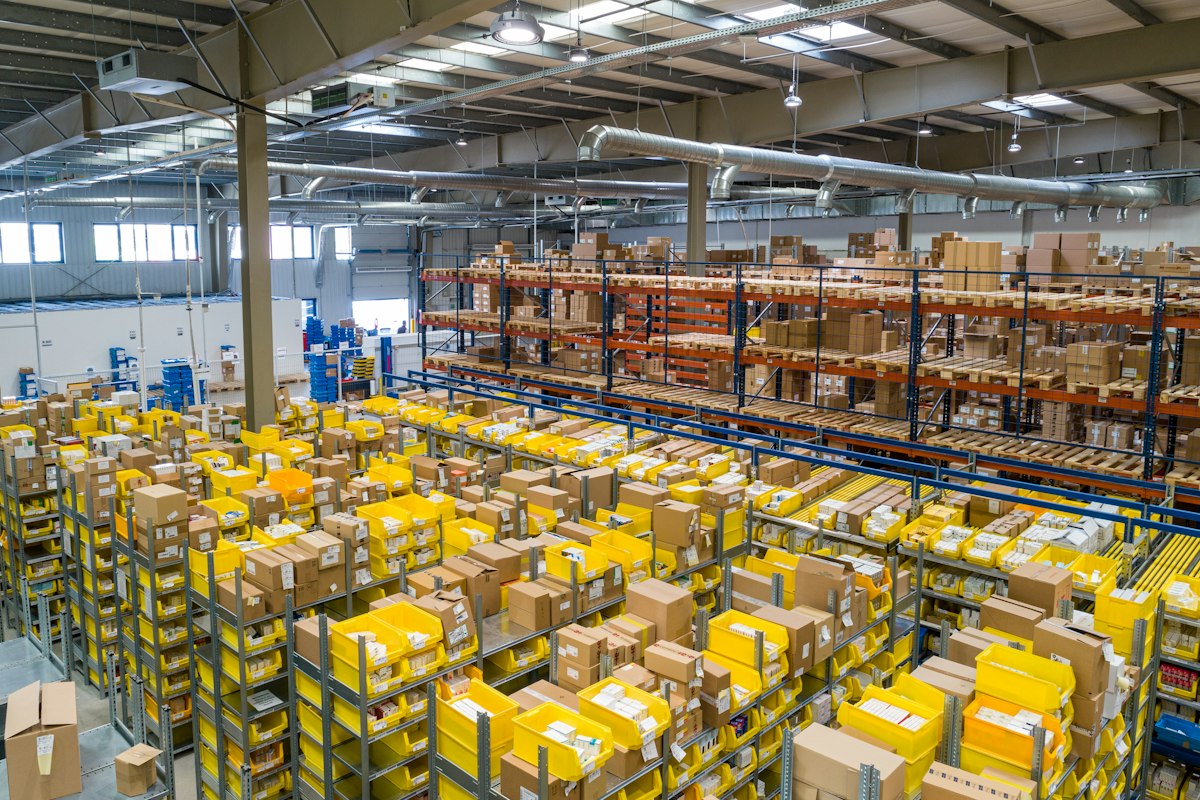
Fulfillment should be local or near-local. A Polish buyer who sees slow cross-border delivery will compare the offer with Allegro, local stores and marketplace sellers. The winning setup keeps stock close enough to promise realistic delivery, connects courier events into the order system, and separates “sent”, “delivered”, “refused”, “returned” and “paid out” as different business states. Many dropshippers lose money because they treat shipment creation as success; in COD markets, collected cash is success.
Trackify fits this gap because it is not a generic shop plugin. It is a COD logistics and dropshipping operating layer already proven in Serbia, Croatia, Macedonia and Montenegro. Serbia runs more than 12,000 shipments per month, Croatia operates in the EU with roughly 1,500-3,000 shipments per month, and Macedonia handles roughly 3,000-6,000 shipments per month. The platform pricing is simple: around €0.50 per shipment as SaaS, or €0.20 per shipment in partnership models where a local operator builds the market.
Where Trackify fits
The local partner angle is especially interesting in Poland. A partner with warehouse access, courier relationships and local language support can plug into Trackify instead of building the whole software stack. The partner focuses on stock, courier negotiation, local client acquisition and operational quality. Trackify provides the workflow backbone for dropshippers who need landing pages, shipment management, COD visibility and reporting across campaigns.
Before launch, define the first-city or first-region scope, courier SLA, return address, support language, call confirmation rules, product margin floor and payout rhythm. Then run a small test with strict measurement: order confirmation rate, dispatch rate, delivery rate, refusal rate, return time, collected cash timing and ad spend recovery. If those numbers work, scale the catalogue. If they do not, fix operations before buying more traffic.
Partner opportunity
Poland is not an easy market, but it is a serious one. For Trackify, the opportunity is to position COD dropshipping as a professional operating system rather than a risky side hustle. The sellers who win will be the ones who combine direct-response speed with logistics discipline. That is exactly where Trackify is strongest.
Poland rewards operators who respect its maturity. The country is not a blank map where a generic Balkan landing page, slow shipping and manual spreadsheets are enough. Customers compare offers quickly, expect delivery choices and punish unclear communication. At the same time, the market is still practical and price-led, which creates room for direct-response offers, bundle economics and performance marketing if the backend is controlled.
Checklist before launch
The most useful way to think about Poland is as a bridge market. It has EU regulation, strong logistics and high digital adoption, but also Central and Eastern European buying behaviour where trust, delivery certainty and value matter. That makes it relevant for Trackify because the platform was built around the hard operational parts of COD and dropshipping: orders, confirmations, shipments, courier status, returns, COD settlement and partner visibility.
For product selection, do not start with “viral” alone. Poland needs margin, low damage risk, understandable benefits and a delivery promise that can be kept. Beauty accessories, home improvement, household gadgets, pet products, health-adjacent accessories and simple electronics can work, but only when return reasons are tracked from day one. The best launch list is not the biggest catalogue; it is a controlled set of SKUs with enough margin to pay for ads, failed delivery and support.
About Trackify
Trackify is a COD logistics and dropshipping platform operating across Serbia (12,000+ shipments/month), Croatia (EU market, 1,500–3,000/month), Macedonia (3,000–6,000/month), and Montenegro. Pricing: €0.50/shipment SaaS or €0.20/shipment partnership model. Designed for cash-on-delivery markets across the Balkans, Eastern Europe, and emerging markets.
Sources and practical interpretation
This guide combines public market signals from Trade.gov, Strategy&/PwC market forecasts and Mordor Intelligence courier/e-commerce outlooks with Trackify operating data from Balkan and EU COD markets. The practical conclusion is simple: Poland has enough volume to justify a dedicated country launch, but the launch must be measured by delivered and paid shipments, not by raw leads.
For dropshippers, the immediate opportunity is to test narrow product clusters with local delivery standards. For local partners, the opportunity is to become the operational bridge: warehouse, courier connection, support and settlement discipline powered by Trackify.

Build the Poland COD lane with Trackify
Use a platform already shaped by real COD logistics, failed delivery control, courier workflows and partner reporting across Serbia, Croatia, Macedonia and Montenegro.