Trackify SaaS pricing per shipment.
Monthly Serbia shipments in Trackify context.
Current operating/partner markets: Serbia, Croatia, Macedonia, Montenegro.
Real signals used today
- DuckDuckGo fallback surfaced Balkan eCommerce opportunity analysis for 2026, confirming continued attention on underserved Southeast European markets.
- nShift delivery-trends coverage points to delivery management, visibility and exception handling as major 2026 logistics priorities.
- Maersk 2026 logistics commentary highlights resilience, integrated logistics and smarter inventory positioning rather than pure lowest-cost shipping.
- European dropshipping supplier searches remain crowded, which increases the value of local warehouse speed, COD-compatible returns and operational trust.
- COD growth in emerging markets keeps depending on last-mile reliability, confirmation discipline, cash reconciliation and local partner execution.
Why supplier logistics matter more than supplier lists in 2026
Every dropshipper asks for a better supplier list. In cash-on-delivery markets, the better question is different: can this supplier feed a local warehouse reliably enough for profitable COD fulfillment? A supplier with cheap product cost can still destroy the campaign if cartons arrive late, SKUs are mixed, packaging is weak, product photos differ from delivered units, or replacement stock cannot be planned before ads scale. In 2026, the operator who wins in the Balkans and nearby EU markets is not the one with the longest spreadsheet of suppliers. It is the one who can turn supply into predictable local stock, fast delivery, clean courier status and controlled cash collection.
This is especially true in COD countries because the customer has not prepaid. Trust is earned at the moment of confirmation and delivery. If the parcel arrives late, the buyer refuses. If the operator cannot explain the product clearly, the buyer refuses. If courier exceptions are invisible until the end of the week, profit disappears quietly. Supplier selection therefore has to include logistics discipline from day one: carton labeling, SKU consistency, defect rate, packaging, replenishment lead time, warehouse receiving process, courier handover speed, and returns handling.
The current market signals all point in the same direction. European ecommerce keeps growing more cross-border, but shoppers expect local delivery speed. Logistics trend reports keep emphasizing visibility, resilience, integrated fulfillment and exception management. Supplier-search content is crowded, which means every seller can find products; fewer sellers can actually operate them well in COD markets. That gap is exactly where Trackify belongs: between product demand and last-mile reality, turning a supplier relationship into an operating system for orders, shipments, COD reconciliation and partner expansion.
The supplier checklist for COD dropshipping
The first check is product repeatability. A supplier must be able to deliver the same SKU, packaging and quality for multiple replenishment cycles, not just one sample order. For COD, inconsistent quality creates refused deliveries and support cost because customers inspect, compare and complain at the doorstep. Ask for carton photos, SKU labels, minimum order quantity, batch consistency and defect handling before moving budget from testing to scaling. The supplier does not need to be perfect, but the weak points must be known before inventory reaches the warehouse.
The second check is shipping rhythm. A good supplier relationship has a predictable path from factory or wholesale source to the local warehouse. For Balkan and EU expansion, that can mean consolidated shipments into Croatia for EU access, Serbia for high-volume Balkan COD, Macedonia for regional coverage, or a partner warehouse in a developing market. The key question is not only price per unit. It is whether replenishment can arrive before the winning campaign runs out of stock. Stockouts are expensive because ad learning resets, customers wait, and support teams waste time explaining delays.
The third check is packaging and parcel economics. COD products should be easy to identify, compact enough for reasonable courier costs, and strong enough to survive handling. Bulky products can work, but they require a higher retail price and tighter return assumptions. Fragile products need better packaging and stricter supplier control. Low-ticket utility products need bundle strategy because delivery cost can eat the margin. Trackify’s per-shipment software pricing, around €0.50 as SaaS or €0.20 in a partnership model, only makes sense when the operator also understands courier cost, confirmation rate, refusal rate and return flow.
The fourth check is communication speed. When a product starts scaling, the local team needs answers quickly: how many units are available, when the next batch ships, what changed in the packaging, and whether replacements can be sent. Slow supplier communication is not only annoying; it creates operational risk. COD campaigns move fast. A delay of three days can mean hundreds of orders waiting, wrong promises on landing pages, and support teams calling customers without reliable information.
| Operating layer | What to check | Why it matters |
|---|---|---|
| Supplier scorecard | SKU consistency, batch quality, communication speed | Prevents COD refusals before scale |
| Local warehouse route | Serbia, Croatia, Macedonia, Montenegro/partner market | Turns overseas supply into local delivery trust |
| COD parcel economics | Courier cost, refusal rate, return handling, Trackify fee | Shows real margin instead of fake product margin |
| Replenishment rhythm | Lead time, safety stock, next-batch visibility | Keeps winning campaigns from stockout collapse |
| Partner model | Local warehouse + courier execution + Trackify workflow | Makes expansion possible in emerging COD markets |
From supplier to local warehouse: the operating flow
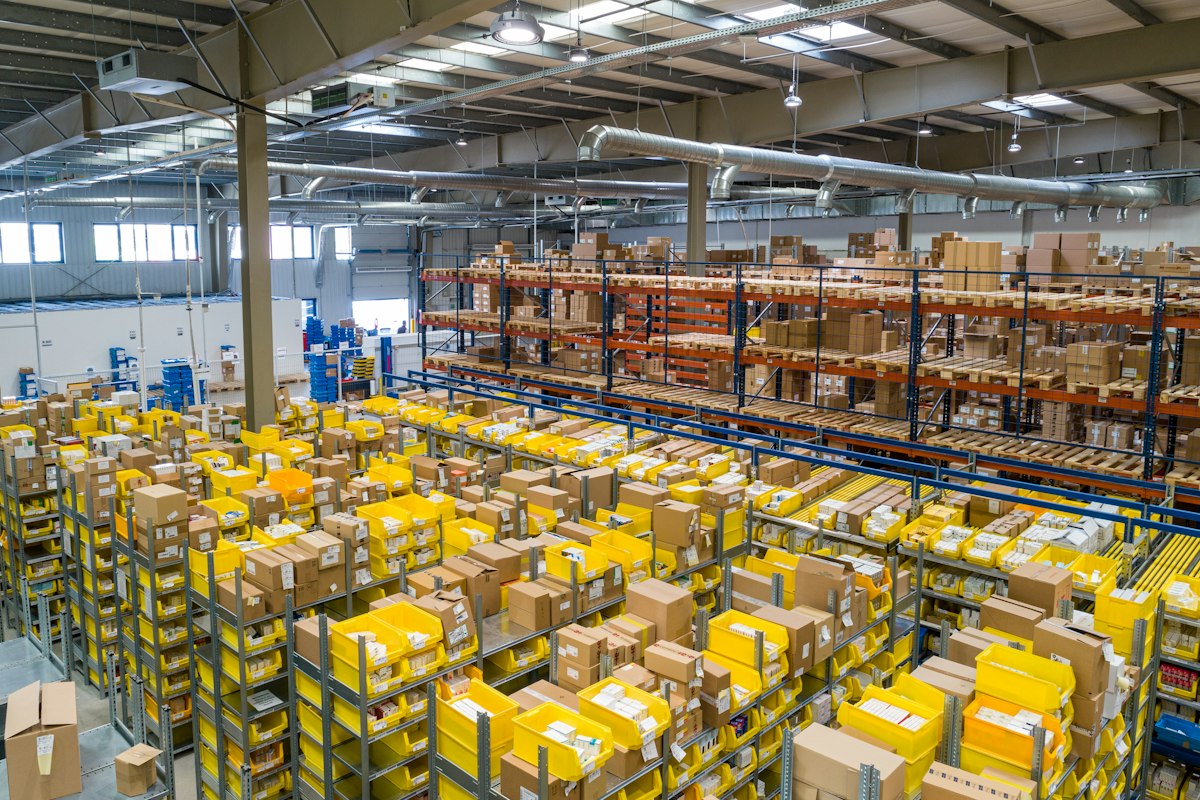
A practical COD logistics flow begins with a controlled product test. The seller identifies a product with a clear demo, simple value proposition and parcel-friendly dimensions. A small batch goes to a local warehouse instead of shipping one by one from overseas to the customer. That local warehouse receives, counts and prepares the stock. Product pages and ads are localized for the target country. Orders enter the Trackify workflow, where confirmation, shipment creation, courier tracking and cash-on-delivery status can be managed in one operating layer.
This local-stock model is powerful because it changes the customer promise. Instead of waiting weeks for a cross-border parcel, the buyer can receive the product through a local courier network. That increases trust and can reduce refusals, especially in countries where COD is still the preferred payment method. It also gives the operator more control over returns. Returned parcels can be inspected and restocked when possible, rather than disappearing into an overseas reverse-logistics mess. For local partners, the warehouse becomes more than storage; it becomes the trust engine behind the sales funnel.
Trackify already has real operating context across this model. Serbia handles 12,000+ shipments per month, proving high-volume Balkan COD execution. Croatia handles roughly 1,500–3,000 shipments per month in an EU market with major growth potential. Macedonia handles roughly 3,000–6,000 shipments per month, and Montenegro runs through a partnership structure. These volumes matter because COD logistics cannot be judged only from software screenshots. The platform needs to reflect courier exceptions, delivery status, cash reconciliation, client reporting and the messy operational details that appear only after real shipments move.
For a dropshipper, this means Trackify can support expansion without forcing the seller to become a logistics company alone. For a local partner, it creates a business model: bring warehouse execution, courier relationships and local market knowledge; Trackify brings the system, workflows and per-shipment economics. Supplier logistics becomes the bridge between the two sides. Good products create demand, local warehouses create trust, and Trackify turns the movement of parcels and cash into something measurable.

Country angles for supplier and partner expansion
Serbia remains the strongest proof market because volume is already high and COD behavior is familiar. The right supplier strategy for Serbia is breadth plus discipline: test many practical products, but move winners quickly into organized local stock. Croatia is the strategic EU wedge. It is smaller today, at roughly 1,500–3,000 shipments per month, but it has outsized value because it can support EU learning, DPD-style courier flows and expansion toward Slovenia, Hungary, Czechia, Slovakia and Poland. Macedonia is the regional execution market where tight teams can process, fulfill and learn quickly.
For Romania, Bulgaria and Poland, the supplier strategy should focus on compact utility products, kitchen convenience, home organization, beauty accessories and pet-care problem solvers. These categories are easy to demonstrate and can be localized without heavy education. For Italy and Spain, the page and creative must carry more lifestyle context, but the same warehouse logic applies: local delivery speed beats vague cross-border promises. For Germany, quality proof and practical use cases matter more than hype, so supplier consistency and product detail become critical.
Beyond Europe, the partner opportunity is even bigger. COD is still important across many emerging markets in Africa, Asia and South America, where trust, last-mile reliability and cash handling are real constraints. Trackify’s partnership model is designed for that environment. A local operator can run the warehouse and courier relationship while Trackify provides the system for shipment status, client management and cash reconciliation. The pitch should not be abstract software. It should be concrete: supplier-to-warehouse playbooks, COD-ready products, clear per-shipment economics and a platform already shaped by Balkan operational reality.
Action plan: how to use this explainer this week
The first action is to score suppliers with an operations-first checklist before ordering scale stock. Give every candidate a score for SKU consistency, communication speed, packaging, replenishment time, defect handling and carton labeling. If the supplier fails two or more areas, keep the test small no matter how attractive the product margin looks. A cheap product that creates returns and delays is not cheap in COD. The second action is to choose one warehouse route per product, not five. Decide whether the product belongs in Serbia, Croatia, Macedonia or a partner market based on demand signal, courier fit and replenishment rhythm.
The third action is to connect landing pages with logistics reality. If delivery is local, say it clearly. If COD is available, explain it simply. If the product is higher AOV or technical, show trust signals, usage details and support expectations. This is where Trackify’s funnel can work naturally: sellers start dropshipping with a COD-ready operating layer, while local partners see how supplier logistics creates repeat shipment volume. Both audiences need the same proof: orders can be confirmed, shipped, tracked, reconciled and improved.
The final action is outreach. Use the supplier-to-local-warehouse story to approach potential local partners in countries where COD is common but software is weak. A partner does not need a generic SaaS demo first. He needs to understand the business: products arrive from suppliers, stock sits locally, orders come from dropshippers, couriers deliver and collect cash, and Trackify manages the workflow. That is a simple, investable story. It turns supplier chaos into a local logistics business and gives Trackify a path to expand one partner market at a time.
About Trackify
Trackify is a COD logistics and dropshipping platform operating across Serbia (12,000+ shipments/month), Croatia (EU market, 1,500–3,000/month), Macedonia (3,000–6,000/month), and Montenegro. Pricing: €0.50/shipment SaaS or €0.20/shipment partnership model. Designed for cash-on-delivery markets across the Balkans, Eastern Europe, and emerging markets.

Build the local COD operating layer
Use Trackify to manage local fulfillment, courier workflows, COD reconciliation, client reporting and partner expansion.