


Bosanski edition — Trackify daily market intelligence, 2026-05-23.
Plaćanje pouzećem is not a legacy payment method in 2026. In many Balkan, Eastern European, and developing e-commerce markets, it remains the trust bridge between a first-time buyer and a new online store. For sellers, that trust creates opportunity, but only if the logistics layer is disciplined. A product can win on Facebook or TikTok and still lose money if confirmation, dispatch, courier tracking, returns, and plaćanje pouzećem reconciliation are slow or unclear.
This week’s Trackify intelligence points to a practical theme: buyers are responding to products with clear visual value and low decision friction. Portable blenders, posture correctors, mini sealing machines, electric lunch boxes, custom jewelry, pet-care tools, beauty organizers, and LED strips all work because the customer understands the benefit in seconds. That makes them ideal for plaćanje pouzećem markets, where a simple offer, a local-language landing page, and fast phone confirmation can outperform a polished but distant brand.
1. plaćanje pouzećem demand is strongest where trust and speed meet
Across Croatia, Albania, Kosovo, Greece, Romania, Poland, Germany, Italy, and Bulgaria, the same pattern appears: customers want convenience, but they still measure risk. If the store looks unknown, plaćanje pouzećem reduces hesitation. If delivery takes too long or communication feels vague, plaćanje pouzećem becomes expensive because refusal rates rise. The winners are not only the best advertisers; they are the operators that remove uncertainty after the click.
Trackify’s daily campaign signals show RO portable blender traffic producing a €7.60 CPA, BG posture-corrector demand at €8.10 CPA, and PL mini-sealer activity rising at €8.90 CPA. These are healthy early numbers because gross margins can still absorb confirmation costs and courier fees. The key is not to scale blindly. Sellers should scale only when the full chain is profitable: ad spend, product cost, packing, courier cost, refused parcels, returns, and plaćanje pouzećem payout timing.
2. Product selection is moving toward practical, demonstrable value
The best plaćanje pouzećem products in 2026 share three traits. First, they solve an obvious everyday problem. Second, the result can be demonstrated in a short video or before-and-after image. Third, the selling price is low enough for impulse purchase but high enough to protect margin. This is why kitchen helpers, wellness accessories, pet tools, beauty organizers, and compact electronics continue to dominate product research lists.
For Balkan and Eastern European sellers, the practical lesson is to avoid products that need long education. If a customer needs five minutes to understand the use case, the offer will struggle in a cold Facebook feed and during phone confirmation. A mini sealing machine works because the ad can show a half-open bag being sealed in two seconds. A pet hair remover works because the before-and-after frame sells the product. A custom necklace works because emotion replaces feature explanation.
3. Logistics data should decide scale, not ad excitement
Many dropshipping teams make the same mistake: they increase budget after a good ad day but ignore operational data. In plaćanje pouzećem, a campaign is not truly successful until parcels are delivered and money is reconciled. A cheap CPA can hide a high refusal rate. A strong checkout rate can hide bad address quality. A viral product can overload a small warehouse and turn good demand into late shipments.
Trackify exists for this exact gap. Sellers need one view of orders, confirmations, courier status, plaćanje pouzećem money, stock, and client reporting. The most useful daily question is not “which product is trending?” It is “which product can we profitably fulfill this week with the stock, courier route, and confirmation capacity we have?” When that question drives decisions, the business stops chasing noise and starts compounding.
4. What to do this week
For sellers, the priority is controlled testing. Launch two to three new product tests, keep budgets tight for the first 48 hours, and judge them on contribution margin after expected refusals, not on CPA alone. For fulfillment partners, the opportunity is even bigger. plaćanje pouzećem markets need local operators that can receive goods, pack fast, call customers, hand parcels to couriers, reconcile cash, and give sellers clean reporting without spreadsheets.
Romania, Bulgaria, Poland, Italy, Germany, Croatia, Albania, Kosovo, and Greece all show demand for practical cross-border products, but each market needs local execution. Language, courier reliability, delivery expectations, and payment habits differ. A centralized ad buyer can create demand, but a local fulfillment partner turns that demand into delivered orders.
Trackify’s recommendation for this week is clear: scale the proven practical products slowly, pause campaigns where CPA moves above margin tolerance, and prioritize countries where courier performance and confirmation speed are already strong. plaćanje pouzećem is not about being old-fashioned. It is about matching buyer psychology with operational discipline.
The operational benchmark for 2026 should be contribution margin by delivered order. That means every product test needs a simple dashboard: ad spend, confirmed orders, cancelled orders, dispatched parcels, delivered parcels, refused parcels, returned parcels, and collected cash. When those numbers sit in different spreadsheets, teams react too late. A campaign can look profitable at noon and become a loss three days later when refusals and courier exceptions arrive. Sellers who review delivered-order economics daily can cut weak creatives faster and move cash into products that actually convert into paid parcels.
Another important trend is localization. The same product does not need the same message in every country. In Romania and Bulgaria, practical household savings and family convenience can work strongly. In Albania, Kosovo, Bosnia, and Croatia, gift products and personal accessories often need emotional creative and fast human confirmation. In Germany, Poland, and Italy, stronger product proof, reviews, and clear delivery expectations matter more. plaćanje pouzećem is flexible, but it punishes generic execution. Local language, local phone support, local courier knowledge, and accurate delivery promises all reduce refusal risk.
Inventory discipline is also becoming a competitive advantage. In classic dropshipping, sellers often test first and solve supply later. In plaćanje pouzećem markets, that creates friction because customers expect fast delivery even when paying at the door. A better model is micro-stock: hold limited quantities of the best-tested products close to the target market, confirm demand quickly, then replenish only when delivered-order data supports it. This protects cash flow while still allowing aggressive testing.
Finally, partners should treat plaćanje pouzećem as a service layer, not just a payment option. The merchant needs visibility, the warehouse needs predictable packing waves, the courier needs clean data, and the end customer needs confidence. When these pieces work together, plaćanje pouzećem becomes a growth channel. When they do not, it becomes a hidden tax on every order.
For Trackify clients, the practical next step is to tag each test by country, product type, creative angle, courier, and refusal reason. After one week, the winning pattern is usually obvious. The strongest products are not always the ones with the cheapest clicks; they are the ones that customers confirm, accept, and pay for consistently. That is why product intelligence and logistics intelligence must be reviewed together every morning before budgets are changed.
Build a plaćanje pouzećem operation that can scale
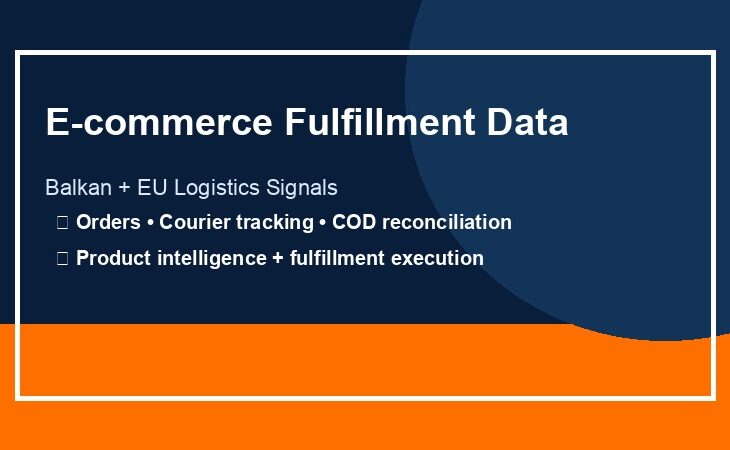
Trackify gives e-commerce sellers and local fulfillment partners one system for orders, courier tracking, plaćanje pouzećem reconciliation, stock, clients, and reporting.