


The global dropshipping market is on a trajectory that few could have predicted five years ago. By 2026, the industry is projected to reach $401 billion in value, growing at a compound annual rate of 21.3%. While much of the early dropshipping boom was concentrated in North America and Western Europe, a new frontier has emerged — and it’s reshaping where the smartest merchants are placing their bets.
Eastern Europe is no longer a footnote in global e-commerce. It is, by nearly every measurable metric, the hottest dropshipping region on the planet right now.
Why Eastern Europe? The Numbers Tell the Story
Romania alone processes between 50–65% of all e-commerce orders via cash on delivery (COD). This single statistic reshapes everything about how you think about market entry. COD markets reward operational excellence — fast delivery, clear communication, professional packaging — over flashy ad spend. Merchants who master the logistics layer in Romania don’t just win sales; they build sustainable businesses that are incredibly difficult for newcomers to replicate.
Bulgaria is recording a 23% year-over-year CAGR in e-commerce growth — outpacing virtually every mature Western market. A younger, digitally-native population is shopping online for the first time, and they’re buying through mobile-first channels. The demand curve is steep, and early movers capture the loyalty of customers who don’t yet have established brand preferences.
Poland follows with 39% of transactions still completed via COD, making it the largest CEE market with significant cash-preference infrastructure. With a population of nearly 38 million and robust logistics networks, Poland represents scale that rivals some Western European countries — at a fraction of the customer acquisition cost.
The Chinese Inventory Reroute — A Structural Tailwind
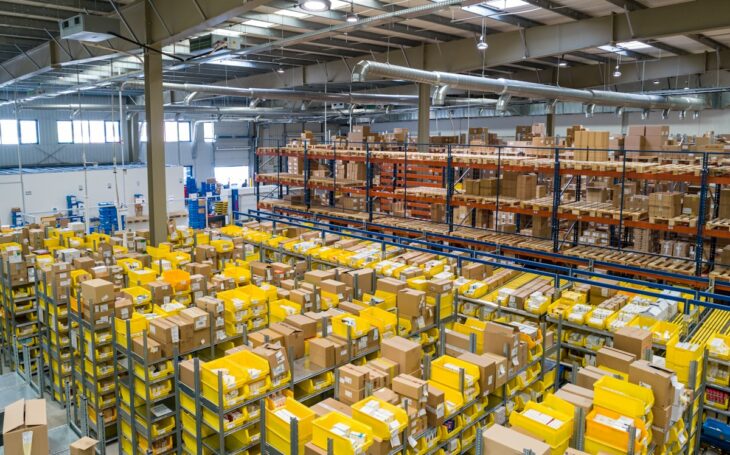
The geopolitical backdrop of 2025–2026 has created an unexpected advantage for Eastern European dropshipping operators. As US tariffs on Chinese goods escalated, major Chinese brands and manufacturers began systematically rerouting their EU inventory allocation. Warehouses in Poland, Romania, and Bulgaria — already well-positioned due to EU membership and favorable logistics infrastructure — became priority fulfillment hubs.
What this means practically: product availability from Chinese suppliers into Eastern Europe has improved dramatically. Shipping times have compressed. Per-unit costs have dropped as volume concentration increased. For dropshipping merchants sourcing from Chinese manufacturers, Eastern Europe is now one of the best-served regions globally in terms of supply chain reliability and speed.
This isn’t a temporary arbitrage — it’s a structural realignment. Chinese brands that invested in EU warehousing infrastructure won’t dismantle it when tariff climates shift. The logistics density is building for the long term.
The COD Advantage: Risk-Free Customer Acquisition
Cash on delivery markets often intimidate Western merchants who are accustomed to card-first checkout flows. This intimidation is, paradoxically, your competitive advantage.
In COD markets, customers order without financial commitment at the moment of purchase. Return rates can be higher. But the conversion rates at the ad-click-to-order stage are dramatically higher too. Customers who would abandon a card checkout form — due to trust issues, friction, or uncertainty — will happily place a COD order. The acquisition cost per order is lower, even accounting for non-deliveries.
The merchants who thrive in COD markets are those with strong fulfillment infrastructure: fast dispatch, professional packaging, proactive SMS communication, and local delivery partners who understand the nuances of cash collection. This is where operational capability becomes a genuine moat.
What This Means for Merchants
If you’re currently running dropshipping operations focused exclusively on Western Europe or North America, Eastern Europe should be your next priority market — not your backup plan. The combination of:
- High growth rates (Bulgaria at 23% CAGR, Romania’s expanding middle class)
- Lower ad costs compared to saturated Western markets
- Improved Chinese supplier logistics into EU warehouses
- COD infrastructure that drives high order volumes
- Less competition from established Western e-commerce players
…creates a window of opportunity that won’t stay open indefinitely. Markets mature. Competition enters. Advertising costs rise. The merchants who move into Eastern Europe in 2025–2026 will be building customer bases and operational expertise that latecomers will spend years trying to catch up to.
What This Means for Fulfillment Operators and Local Partners
The dropshipping boom in Eastern Europe isn’t just an opportunity for merchants — it’s a structural opening for logistics operators, fulfillment centers, and local business operators who understand the regional market.
Fulfillment operators in Romania, Bulgaria, and Poland are seeing surging demand for COD-capable last-mile delivery. International merchants who lack local infrastructure are actively seeking partners who can handle cash collection, returns management, and customer communication in local languages. The value of local knowledge has never been higher.
For entrepreneurs in the region, becoming a Trackify local partner means plugging into a network of international merchants actively looking for exactly what you can offer: reliable, local, COD-capable fulfillment. The platform handles the merchant-facing technology; you bring the on-the-ground operational capability.
The 2026 Playbook: Move Fast, Build Deep
The $401 billion dropshipping market of 2026 won’t be won by merchants spraying ad spend across every market simultaneously. It will be captured by operators who pick their geographies strategically, build genuine fulfillment infrastructure, and develop the customer relationships that translate into repeat purchase rates and referrals.
Eastern Europe — with its COD-dominant markets, rapidly growing e-commerce adoption, improved Chinese supply chain access, and still-affordable customer acquisition costs — is the clearest opportunity in the global dropshipping landscape right now.
The question isn’t whether to enter. The question is whether you move before the window closes.
Ready to grow with Trackify?
Join merchants and logistics operators across 6 countries