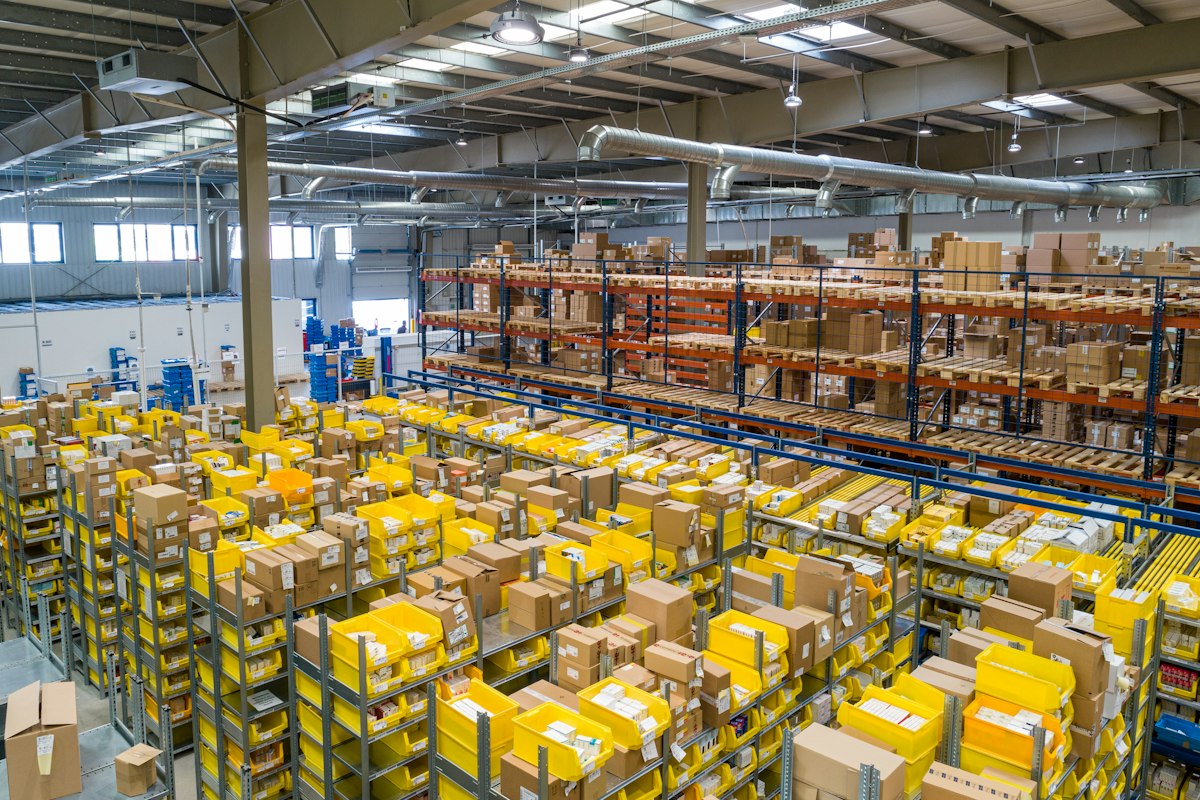
Cash-on-delivery logistics, returns and payout visibility for trust-sensitive markets.
Trackify SaaS pricing per shipment.
Monthly Serbia shipments in Trackify context.
Live market signals used today
- Cross-border ecommerce conversations in 2026 keep centering on delivery promise accuracy, customs friction, returns handling and local last-mile reliability.
- COD remains a trust accelerator in the Balkans, Eastern Europe and emerging markets, but it only works when confirmation, courier status and payout reconciliation are controlled.
- Winning-product lists for May 2026 are still weighted toward practical, demonstrable products: portable blenders, posture correctors, pet-hair tools, kitchen gadgets and car organizers.
- European sellers are looking for local fulfillment partners because faster dispatch, native support and local courier relationships improve conversion more than translation alone.
- Trackify’s strongest proof points are operational: Serbia at 12,000+ shipments/month, Croatia at 1,500–3,000/month, Macedonia at 3,000–6,000/month and Montenegro on the partnership model.
Friday signal: logistics is now the growth lever, not the back office
The May 2026 ecommerce data signal is clear: European dropshipping growth is moving away from pure traffic hunting and toward logistics execution. Sellers still need winning products and strong creative, but the campaigns that survive scaling are the ones with reliable confirmation, dispatch, tracking, returns handling and COD reconciliation. In a cash-on-delivery market, the order is not really won at checkout. It is won when the buyer answers the phone, accepts the parcel, the courier status is correct, and the cash payout reconciles cleanly.
This matters especially across the Balkans, Eastern Europe and emerging markets where COD remains an important trust bridge. Buyers may hesitate to pay upfront to a new online store, but they will place an order if they can inspect the delivery moment and pay at the door. That flexibility increases conversion, yet it creates a different kind of risk for merchants. A weak address, unclear product promise, slow confirmation call or mismatched courier workflow can turn a promising order into a refusal, return, or support problem.
Trackify is built for this operating environment. It connects the seller’s growth engine to the real logistics loop: order capture, confirmation, fulfillment, courier status, delivery attempts, returns and COD payout visibility. The platform already has concrete operating context across Serbia with 12,000+ shipments/month, Croatia as an EU-market base with 1,500–3,000/month, Macedonia with 3,000–6,000/month, and Montenegro through a partnership model. That operational proof is the difference between generic ecommerce software and COD infrastructure.
What the data roundup says about COD and returns
The first market signal is that COD is still valuable, but less forgiving. Buyers like payment flexibility, but they also compare delivery speed and support quality more aggressively. If a store says fast delivery but the parcel sits for days, the buyer becomes harder to reach. If the product image is exaggerated, the buyer can refuse at the door. If the confirmation team is not trained to catch bad addresses or duplicate orders, the courier becomes the expensive filter. COD can increase order volume, but poor operations turn that volume into noise.
The second signal is that returns are becoming a data problem. A returned parcel should not be treated as a simple loss. It should tell the operator whether the issue came from the product, supplier, ad promise, customer qualification, courier delay, delivery timing, packaging or support script. Without reason codes, teams only see a return count. With structured return data, a seller can see whether a product should be stopped, a page should be rewritten, a courier route needs attention, or a confirmation script needs a stronger objection check.
The third signal is that cross-border sellers need local operating partners. Translation helps a landing page, but it does not create warehouse discipline, courier relationships, local phone support, return inspection or COD reconciliation. A seller expanding from Serbia into Croatia, Romania, Bulgaria, Poland, Italy, Spain or Germany needs more than a translated funnel. They need a delivery promise that matches the country. That is why local fulfillment partners have a real opening in 2026: they convert foreign demand into deliverable local operations.
| Signal | What it means | Trackify action |
|---|---|---|
| COD trust gap | Customers in trust-sensitive markets still prefer paying at delivery, but refusal risk rises when delivery promises are vague. | Use confirmation, clear tracking and local support before dispatch. |
| Returns pressure | Returns are now a margin-management issue, not only a warehouse issue. | Track reason codes, product defects, ad promise mismatches and courier events. |
| Cross-border friction | EU and Balkan expansion is limited by delivery time, language, customs and cash-flow visibility. | Localize operations, not only landing pages. |
| Product proof | Practical demo products remain easier to sell in COD funnels than abstract lifestyle products. | Prioritize products with visual proof and manageable parcel economics. |
| Partner gap | Sellers want country access without building warehouses and courier contracts in every market. | Offer Trackify-powered local fulfillment as infrastructure. |
Product demand signals: practical products still fit COD best
May 2026 product research continues to favor practical, demonstrable products. Portable blender bottles, posture correctors, mini sealing machines, electric lunch boxes, pet-hair removers, scalp brushes and car organizers keep appearing because they are easy to explain in a short video. A buyer understands the before-and-after quickly. The product solves a visible pain. The price can sit inside an impulse-buy range. Most importantly for COD, the delivery expectation is simple and the parcel economics can remain manageable.
This does not mean every practical product is safe. A bulky car organizer may have better gross margin but higher shipping cost. Personalized jewelry can create high perceived value but requires stricter ETA messaging and order accuracy. Beauty products can scale quickly but often create higher support questions if claims are too aggressive. The best COD sellers therefore evaluate products through an operating lens before they scale: package size, breakage risk, return reason, confirmation quality, delivery promise, supplier reliability and support load.
Trackify’s opportunity is to make that evaluation visible. When orders, delivery statuses, failed attempts and returns live in the same operating layer, the seller can compare products by delivered profit, not just ad metrics. A product with a cheap cost per lead but high refusal rate may be worse than a product with a slightly higher CPA and cleaner delivery. That distinction is where COD sellers win or lose. Advertising finds demand; fulfillment decides whether demand becomes money.

Country and partner opportunities for Trackify
The strongest regional opportunity remains countries where ecommerce demand is growing faster than logistics maturity. The Balkans are already familiar territory: Serbia has proven volume, Macedonia is stable and growing, Montenegro validates the partnership model, and Croatia gives Trackify an EU foothold. From Croatia, the expansion logic points toward nearby EU and CEE markets where sellers want faster delivery and simpler COD or post-purchase workflows: Slovenia, Hungary, Romania, Bulgaria, Poland, Czechia and Slovakia.
For local partners, the value proposition is straightforward. A partner does not need to become a software company. They need warehouse discipline, courier relationships, native-language support, local market judgment and the willingness to run a tight COD operation. Trackify supplies the operating system: order flow, shipment visibility, client reporting, return management and partnership economics. At around €0.50 per shipment for SaaS users or around €0.20 per shipment in a partnership model, the unit economics can be simple enough to test country by country.
The same logic extends beyond Europe. In Africa, Asia and South America, COD and trust-sensitive delivery still matter in many markets. A local partner who can handle cash collection, failed delivery workflows and seller reporting has a real business opportunity. The important filter is not whether the country is fashionable. It is whether sellers have demand, buyers need trust, couriers can support the flow, and a local operator can make the last mile reliable. Trackify should keep targeting those markets through practical content and partner outreach.
Action plan for sellers and local operators this week
For dropshippers, the action plan is to audit the full order lifecycle before increasing budget. Look at confirmation rate, address quality, buyer availability, dispatch speed, failed delivery reasons, delivered rate, return reasons and COD payout timing. If those numbers are unclear, scaling traffic is premature. Use product testing to learn which offers survive delivery, not only which offers generate cheap leads. The winning campaign in 2026 is the one that stays profitable after courier costs, refusals, returns and support time.
For local partners, the action plan is to package infrastructure as a market-access offer. Sellers do not only need storage. They need a reliable country launch partner: stock receiving, parcel preparation, courier handover, customer communication, returns, COD reconciliation and transparent reporting. A partner who can say, ‘we can launch your COD operation in this country with Trackify visibility from day one,’ has a stronger offer than a warehouse quoting pallet space. The service is execution, not shelves.
For Trackify, the content angle should stay concrete and evidence-led. Publish country guides, COD operations guides, returns checklists, partner opportunity pages and data roundups that show how the platform handles real pain. Mention the real footprint: Serbia, Croatia, Macedonia and Montenegro. Mention the pricing model. Mention the shipment volumes. Generic AI-style ecommerce content will not convert serious operators. Practical logistics content will, because the people searching for it already know the pain.
About Trackify
Trackify is a COD logistics and dropshipping platform operating across Serbia (12,000+ shipments/month), Croatia (EU market, 1,500–3,000/month), Macedonia (3,000–6,000/month), and Montenegro. Pricing: €0.50/shipment SaaS or €0.20/shipment partnership model. Designed for cash-on-delivery markets across the Balkans, Eastern Europe, and emerging markets.

Use the data. Build the delivery system.
Trackify helps sellers and local partners turn COD demand into delivered orders, cleaner returns and visible cash flow.