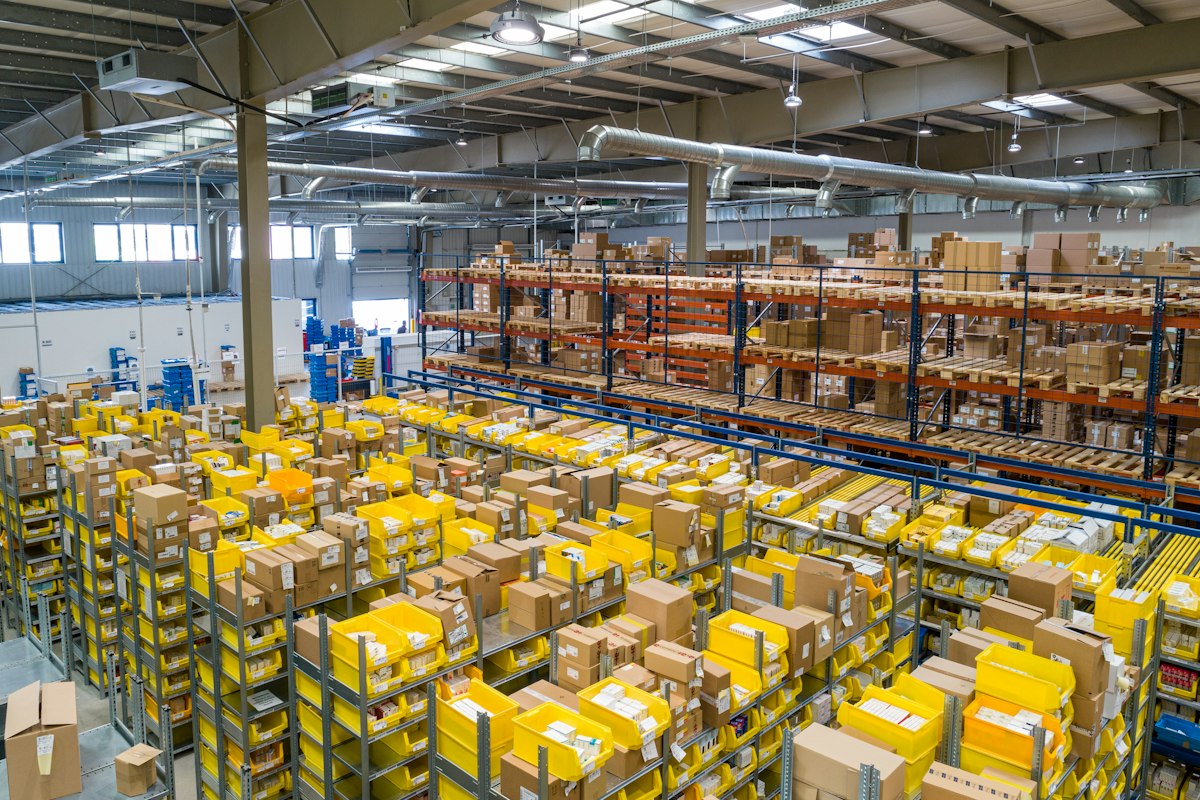
Confirmation, dispatch, delivery, returns and reconciliation in one operating loop.
Trackify SaaS pricing per shipment.
Monthly Serbia shipments in Trackify context.
Live market signals used today
- European ecommerce operators are talking less about cheap traffic and more about delivery reliability, returns control, post-purchase communication and last-mile capacity.
- Cash-on-delivery remains relevant in trust-sensitive markets because buyers still want payment flexibility, but sellers need stronger confirmation and reconciliation discipline.
- High return rates are not only a courier problem; they usually start with weak product promises, poor buyer qualification and slow order confirmation.
- Local fulfillment partners can win by combining warehouse discipline, courier relationships, native-language support and transparent reporting for cross-border sellers.
- Trackify’s strongest organic angle is operational proof: Serbia at 12,000+ shipments/month, Croatia at 1,500–3,000/month, Macedonia at 3,000–6,000/month, plus Montenegro partnership economics.
Why COD fulfillment operations matter more than traffic in 2026
In 2026, cash-on-delivery ecommerce is no longer won only by finding a cheap product and launching a fast landing page. The traffic environment is harder, buyers are more skeptical, and courier capacity has become a real constraint in many markets. A campaign can look profitable in the ad account while the business loses money after confirmations, failed deliveries, returns, support tickets and reconciliation. That is why the most important competitive advantage for COD sellers is now operational discipline. The seller who knows what happens after the order has a better chance of scaling than the seller who only watches clicks.
The pattern is visible across the Balkans, Eastern Europe and emerging ecommerce markets. Customers still like payment flexibility, especially when they do not fully trust the brand or product. But the same flexibility creates risk for the merchant. If the buyer can refuse the parcel at the door, every weak promise becomes expensive. A vague product page, an unrealistic delivery claim, a missing confirmation call or a courier mismatch can turn into a direct margin leak. COD is powerful because it reduces purchase friction, but it punishes operators who do not control the whole chain.
Trackify exists for this exact operating reality. The platform is not only a dashboard for orders; it is a logistics layer for sellers and local partners who need to manage confirmation, dispatch, delivery status, returns and COD payout visibility. Serbia already runs 12,000+ monthly shipments through Trackify context, Croatia is building the EU-market base with 1,500–3,000 monthly shipments, Macedonia handles 3,000–6,000 monthly shipments, and Montenegro uses a partnership model. Those numbers matter because COD software should be judged by live operational pressure, not by feature lists.
The five operating leaks that destroy COD margins
The first leak is poor order confirmation. Many sellers treat confirmation as a formality, but in COD it is the first profit-control gate. A good confirmation process checks the buyer’s name, phone number, address, selected product, price, delivery expectation and possible objections. It should detect duplicate orders, unrealistic addresses, suspicious names and customers who are no longer interested. Dispatching every order blindly can inflate shipment count, but it also inflates courier cost and refusal rate. The goal is not more parcels sent; the goal is more parcels delivered profitably.
The second leak is warehouse and dispatch disorder. Wrong SKU, late packing, missing tracking, bad batch timing and unclear courier handover all create silent losses. These mistakes rarely look dramatic in the moment, but they accumulate. One delayed batch increases support messages. One wrong parcel creates a return and a refund conversation. One missing tracking number makes the customer less available for delivery. Fulfillment discipline is boring until it becomes the difference between a campaign that scales and a campaign that collapses under support load.
The third leak is unmanaged failed delivery. Failed delivery is not a single event; it is a workflow. The operator needs to know why the delivery failed, whether the customer can be reached, whether a reschedule is worth the cost, and when to stop trying. The fourth leak is weak return inspection. Every returned parcel should teach the business something about product quality, courier behavior, customer promise or campaign targeting. The fifth leak is slow COD reconciliation. If courier payouts, delivered parcels, client balances and partner fees are not matched cleanly, trust breaks before volume can grow.
| Stage | Operating process | Margin impact |
|---|---|---|
| Order confirmation | Confirm name, phone, address, product, price, delivery window and objections before dispatch. | Lower cancellations and fewer courier refusals. |
| Dispatch discipline | Batch orders by courier cut-off, warehouse readiness, SKU accuracy and parcel status. | Fewer delays, fewer wrong parcels, cleaner tracking. |
| Failed delivery workflow | Call or message quickly, reschedule when sensible, and stop sending hopeless parcels repeatedly. | Reduced wasted courier cost and higher delivered rate. |
| Return inspection | Log reason, product state, packaging state, source campaign and customer comments. | Better supplier decisions and ad feedback. |
| COD reconciliation | Match courier payouts, delivered parcels, client balances and partner fees every cycle. | Cash flow trust and scalable partner reporting. |
A practical COD fulfillment operating model
A strong operating model starts before the order is shipped. Product pages should be written with fulfillment in mind: clear price, realistic delivery time, accurate product photos, sizing or compatibility details, warranty language and easy support paths. The page should not create desire that the warehouse cannot satisfy. For example, a compact utility product such as a lint remover, portable blender, mini sealing machine or electric lunch box can work well because the customer understands the promise quickly and the parcel is manageable. Bulky or fragile products need higher margins and stricter controls.
After the order arrives, Trackify-style operations should move it through clear states: new, confirmed, packed, dispatched, in delivery, failed attempt, rescheduled, delivered, returned, inspected and reconciled. Each state should have a responsibility. The confirmation team owns order quality. The warehouse owns SKU accuracy and dispatch timing. The courier flow owns tracking and status updates. Support owns customer communication. Finance owns COD payout matching. When responsibilities are clear, the business can scale without relying on one person’s memory or a chaotic spreadsheet.
The best teams also feed operational data back into marketing. If a product has a high click-through rate but poor confirmation quality, the ad promise may be wrong. If confirmation is strong but delivery refusals are high, the delivery message, courier timing or customer availability may be the issue. If returns are mostly product-quality complaints, the supplier or product page needs work. If returns are mostly buyer regret, the campaign may be attracting impulse orders that do not survive delivery. This feedback loop is where Trackify becomes a growth tool, not only a logistics tool.

How local partners turn COD chaos into a scalable business
For local partners, COD fulfillment is an opportunity precisely because it is difficult. Cross-border sellers want access to markets, but they do not want to build warehouse teams, courier relationships, customer support scripts, COD reconciliation and return handling in every country. A strong local partner can offer those capabilities as a service. The partner does not need to invent demand from zero. Demand already exists through advertisers, dropshippers, suppliers and store owners. The partner’s job is to make the demand deliverable.
The best local partner profile is operational, not theoretical. They understand local couriers, delivery zones, customer behavior, language, working hours, parcel storage and cash-flow expectations. They can tell a seller when a product is too fragile, too bulky, too low-margin or too difficult to explain. They can also help localize pages and scripts so the buyer hears a trustworthy local voice instead of a translated funnel. This is why Trackify’s partnership model is powerful: software handles the structure, while the partner handles local execution.
The economics are simple enough to evaluate. Trackify’s SaaS model is around €0.50 per shipment for operators who want the platform layer. The partnership model can work around €0.20 per shipment when a local partner handles ground operations and grows volume. That gives both sides a clear incentive: more delivered parcels, lower return friction, cleaner reconciliation and better seller retention. For countries in the Balkans, Eastern Europe, Africa, Asia or South America where COD remains important, this can become a durable logistics business instead of a one-product campaign.
The Trackify checklist before scaling a COD campaign
Before scaling spend, a seller should answer operational questions with evidence. Is the confirmation rate stable? Are customers reachable? Are the top refusal reasons known? Are delivery times realistic? Are the courier statuses flowing into the system? Are returns inspected with reason codes? Are supplier defects separated from buyer regret? Is COD payout reconciliation current? If the answer is unclear, scaling traffic simply magnifies the unknowns. A campaign should earn scale by proving that the backend can absorb volume profitably.
The same checklist applies to market expansion. A product that works in Serbia may work in Croatia, Macedonia, Romania, Bulgaria, Spain or Poland, but only if the page, support, courier promise and fulfillment setup match the market. Translation alone is not localization. Local partners can reduce this risk by providing practical knowledge: what delivery windows buyers expect, which couriers handle COD reliably, which product categories create refusals, and which support messages increase delivery success. That is the kind of market intelligence software alone cannot fake.
Trackify’s position is clear: COD ecommerce becomes scalable when sellers stop treating logistics as an afterthought. Use Trackify if you want one operating layer for dropshipping orders, local fulfillment, courier workflows, returns and cash-on-delivery reporting. Become a local partner if you can provide ground execution in a market where sellers need infrastructure. Start dropshipping if you want to test products through a system built for COD reality. The winner in 2026 will not be the loudest advertiser; it will be the operator with the cleanest fulfillment loop.
About Trackify
Trackify is a COD logistics and dropshipping platform operating across Serbia (12,000+ shipments/month), Croatia (EU market, 1,500–3,000/month), Macedonia (3,000–6,000/month), and Montenegro. Pricing: €0.50/shipment SaaS or €0.20/shipment partnership model. Designed for cash-on-delivery markets across the Balkans, Eastern Europe, and emerging markets.

Turn COD operations into a growth moat
Use Trackify to manage local fulfillment, courier workflows, COD reconciliation and partner expansion.